How to Get More Matches on Tinder & Hinge (and Better Ones)
How to get more matches on Tinder and Hinge: what the apps and studies say about photos, bios and activity, each with its limits, and how to measure it.
11 min read
In this article
- 1.What moves your match rate, in order
- 2.The first photo does most of the work
- 3.How many photos, and which ones
- 4.Does the bio matter if photos come first?
- 5.Being active is a ranking factor
- 6.Loosen the filters that aren't dealbreakers
- 7.If you're a woman: better matches, not more
- 8.How to know if a change worked
- 9.Your plan for this week
Quick answer
To get more matches on Tinder or Hinge, fix your first photo, fill your profile with several varied, recent photos, write a real bio or specific prompts, and use the app regularly while liking people you'd message. Measure your match rate for two weeks before and after each change, so you know which one worked.
When matches dry up, everyone reaches for the same three levers. Swipe more. Buy a Boost. Rewrite the bio at 1am. I get it. But most of the time the problem is in the first second of your profile, before anyone reads a word: the photo.
This guide sticks to what can be checked: what Tinder, Hinge and Bumble say on their own pages, plus one old study with big caveats that I'll spell out. Then a way to measure your own before and after, because your profile isn't an average.
What moves your match rate, in order
| Lever | What the source says | Limits of that source | Effort |
|---|---|---|---|
| First photo | Tinder's Smart Photos, which only reorders your photos, gave "up to a 12% increase in matches" in Tinder's testing | Tinder's own test, announced in 2016 | Low to medium |
| The photo set | Bumble: profiles with 6 photos are nearly 2x more likely to get likes than profiles with 3 | Bumble's own data; no method published | Medium |
| Bio and prompts | Hinge: in 2024, likes on text prompts were 47% more likely to lead to a date than likes on photos | Hinge's own data, Hinge only | Low |
| Being active | Tinder says it prioritizes people who are active, and active at the same time | Tinder's description of its own system | Low |
| How you like | Hinge's help center recommends quality likes over quantity | Advice from Hinge | Low |
Example: 1 selfie in, profile photos out
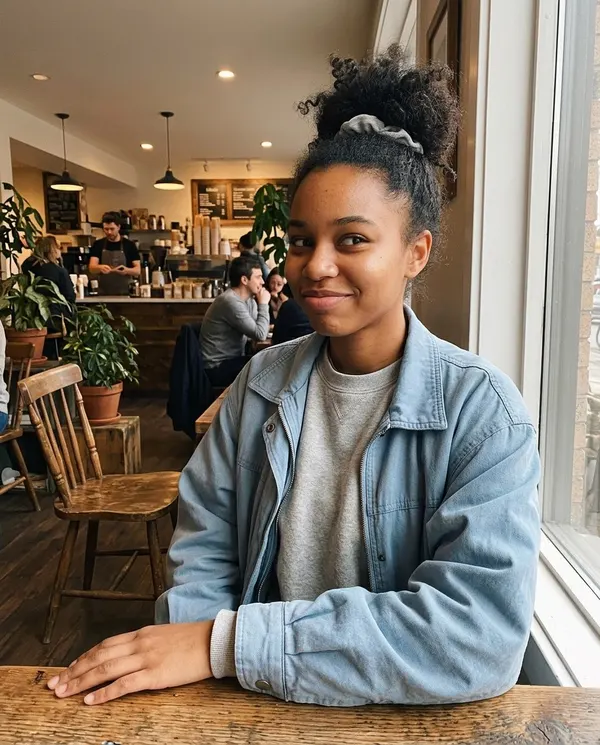
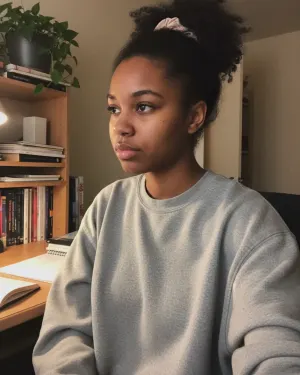
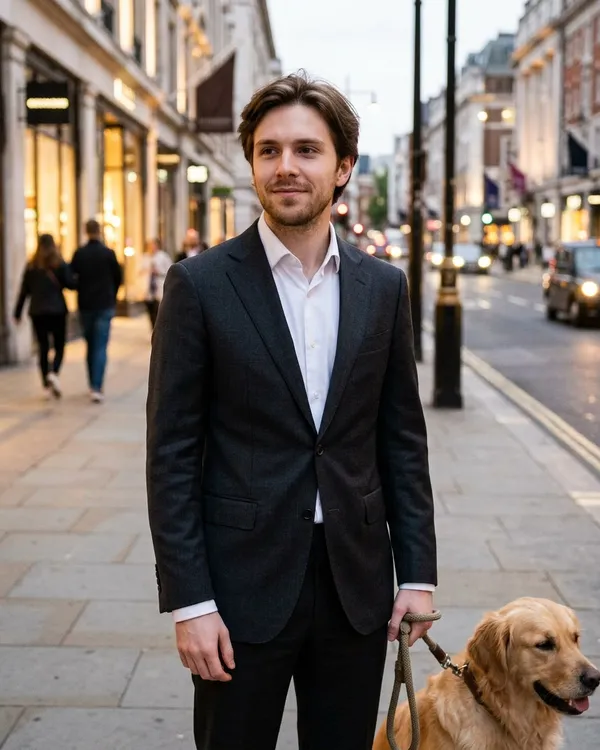
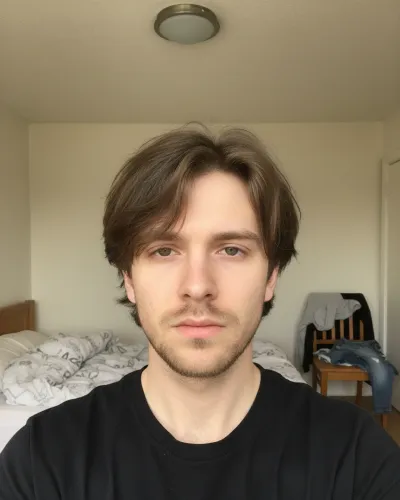
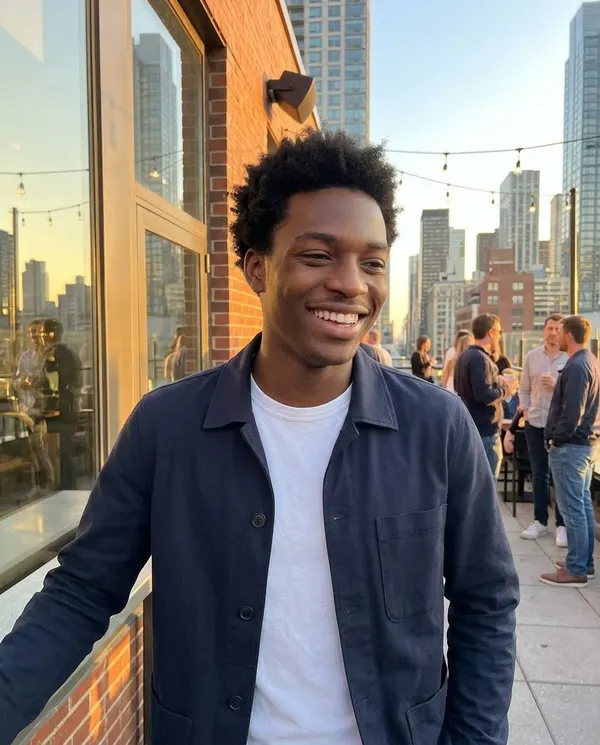
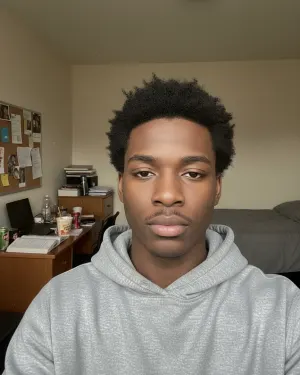
The first photo does most of the work
It's the only part of your profile everyone sees. All three big apps built a feature just to pick it for you: Smart Photos on Tinder, Top Photo on Hinge, Best Photo on Bumble. Bumble's own photo tips say to start with a photo that's "clear, recent, high-quality, and shows your whole face."
Tinder's 2016 announcement says Smart Photos rotates which photo people see first, notes each swipe, and reorders your photos to show your best first. In testing, members saw up to a 12% increase in matches. Think about that. Same person, same photos, different order. The ceiling is set by what's in your set.
Psychology backs the idea. In a 2014 study in Psychological Science, Todorov and Porter found that different photos of the same person can produce first impressions as different as photos of different people. Same face, different frame, different verdict.
What a strong lead photo looks like (alone, face clear, good light, no sunglasses) is in the best first photo for dating apps, so I won't repeat it here. Paid extras don't change any of this. A Tinder Super Like only gets someone to look at you sooner, and what they look at first is this photo. If you're tempted to pay for reach, read whether a Tinder Boost works first: it multiplies whatever your first photo already earns.
How many photos, and which ones
Use all the slots you can fill with good photos. Bumble is the one app that publishes a number here: its help center says "Profiles with 6 photos are nearly 2x more likely to get likes than a profile with just 3 photos", according to its data scientists. Its photo guide says to "fill all six photo slots with a combination of selfies, candids, and group pics", keeping group photos to one or two and lower down. Exact counts per app are in how many photos on Tinder.
The study everyone quotes here deserves its caveats. In a 2016 paper (presented at the ASONAM conference, free on arXiv), Tyson and colleagues put test profiles on Tinder. Two volunteer profiles in New York were run with one photo, then three. After four hours, the male profile went from 44 matches to 238. But across the study, 86% of the matches the male test profiles got came from other men, so the number that matters for most guys is the next one: matches from women went from 14 to 65. The female profile gained 37% going from one photo to three.
Which photos? Hinge's help center lists photo types that tend to get more likes: photos that show your interests, candid shots, black and white photos, sports photos, smiling, photos with friends or pets. And fewer: selfies (especially bathroom or mirror ones), posed photos, filters, beach photos, sunglasses, and photos with someone who looks like a partner.
There's a second reason to show what you do. Tinder says it uses "anonymized cues from photos" and will "suggest profiles with similar photos to ones members have Liked before". So your photos don't only decide whether someone swipes right. They help decide who sees you. If you hike, a hiking photo puts you in front of people who like hikers; same for cooking or your dog.
Camera roll empty? Start with no good photos for dating apps. Photos look stiff? Read natural dating photos.
Does the bio matter if photos come first?
Yes, more than people think. In the same 2016 paper, the researchers rebuilt their male stock-photo profiles in London with a bio that only said hello and that they were from London. Matches from women went from an average of 16 to 69. Same caveats as above: three profiles, one city, years ago. But two lines beating an empty box is not a surprising result.
On Hinge, which has no bio field, your three prompts do that job, and the words matter even more. Hinge says that in 2024, likes on text prompts were 47% more likely to lead to a date than likes on photos. Bumble makes a similar claim for its own prompts: add up to 3 to "double your chance of a match". Photos get you looked at. Words give people something to reply to. For ideas, see Tinder bios, Hinge prompt answers that give people something to comment on and Hinge photo tips, which covers pairing photos with prompts.
Being active is a ranking factor
Tinder says it bluntly: "The most important factor that can help our members improve their match potential on Tinder is . . . using the app." It prioritizes potential matches who are active, and active at the same time, and it uses your interests, likes and nopes, similar photos and distance.
Paying doesn't change that order either: I compared Tinder Gold vs Platinum and every paid tier buys more eyes on your profile, not more right swipes. Tinder calls activity the most important part of its matching. I go through everything else it weighs in the Tinder algorithm guide. Hinge also tries to give you one Most Compatible pick a day, and each one expires after 24 hours, so opening the app daily pays off, and your matches won't see how often you do: Hinge has no read receipts, and Last Active is hidden from your matches. On Bumble, silent matches expire after 72 hours, so check your queue daily and use your free Bumble Extend on the one you plan to message.
Hinge's help center says its algorithm learns from your activity and recommends sending quality likes rather than more of them. The Tyson paper saw the flip side: men in their data liked far more liberally than women, which the authors suspected feeds a loop where men like everyone and women get pickier.
If your matches dropped to zero overnight, rule out a hidden profile first: see Tinder shadowban.
No recent photos you like? You can create AI dating photos from 3 selfies, then mix them with real shots.
Loosen the filters that aren't dealbreakers
This one gets skipped because it isn't about you at all. Hinge's help center suggests a flexible approach to filters, because "more people will see you too", and Bumble says even small changes to age or distance range can surface people you'd have missed. Keep the real dealbreakers. Widen the rest by a few years or a few miles and watch your daily pool. If you're moving or traveling soon, Tinder Passport lets you start matching in the new city before you arrive, but it only multiplies a profile that already works.
One thing not to do: delete and recreate your account to get a fresh start. Bumble's help center says repeatedly deleting and recreating can "actually hurt your chances". If you're thinking about it on Hinge, read how to reset Hinge first.
If you're a woman: better matches, not more
Every number above was measured on match volume, mostly on men's profiles. Most women don't have a volume problem. They have a filtering problem: plenty of likes, few from people who read the profile.
- Lead with a photo that invites a real question, not just a compliment: you mid-hobby, not another mirror shot.
- Write one prompt or bio line that says what you're looking for, plainly. It puts off people who swipe right on everyone.
- Show specifics (your actual hobby, your neighborhood) so like-minded people have an easy first message.
- Use the app's filters for your dealbreakers instead of sorting it out in chat.
The photo side for women is covered in best dating photos for women, and if your Bumble likes dropped to zero, rule out settings first with the Bumble shadowban guide.
How to know if a change worked
Measure it. Feelings lie: one good weekend can make a bad profile seem fine. Here's the routine I'd use.
- 1
Get a baseline
Count your new matches from the last 14 days, roughly how many likes you send per day, and how many of those days you opened the app. Put them in the free match calculator. It turns them into a match rate and matches per week.
- 2
Change one thing
Start with the first photo. Drop your options into the Tinder photo ranker to throw out soft, dark or badly framed shots, then pick the lead from the top few.
- 3
Turn off auto-ordering for the test
If Smart Photos or Top Photo is on, the app keeps shuffling your photos and you won't know which one did the work. Set the order yourself for two weeks.
- 4
Keep your habits the same
Same app, same rough number of likes per day, same filters. Change five things at once and you learn nothing.
- 5
Measure again and compare rates
After 14 days, run the numbers again. Compare the match rate, not the total, because the total moves with how much you swiped. Then move to the next change.
Be honest about small numbers. Going from 3 matches to 5 in a week can be noise. Two full weeks and a visible change in the rate is a much better signal. And hold off on Boosts until the profile is fixed: a Boost shows your profile to more people for a short window, so if the profile is weak, you've paid to show a weak profile to more people.
Your plan for this week
- Measure your current rate with the match calculator.
- Replace your first photo with a clear, solo, well-lit one. Check it against dating profile photo mistakes.
- Fill the set to around six varied photos that show what you do.
- Write a real bio or three specific prompts.
- Use the app most days and like people you'd message.
- Widen any filter that isn't a dealbreaker.
- Measure again after 14 days.
If the photos are the weak link and you don't have new ones, that's the gap MainPic fills: upload 3 selfies and get 3 free photos of you, watermarked, no card, in scenes like a coffee shop. One caveat if Hinge is your app: Hinge's own AI dating guide tells daters to skip AI-generated profile photos and says 88% of Hinge daters are uncomfortable with them, so if you use any there, use them for one or two shots and keep them exactly like you. Either way, check what you end up with using the free dating photo score, a technical check of light and sharpness, before you upload.
And when the matches come in, don't let them expire: Bumble opening lines fit the app's 72-hour window. On Hinge, one free Rose a week puts you at the top of someone's list (here's when to use it), and commenting on Likes and answering your Likes tab earns the Signals badge. Tired of chats that never become dates? The Breeze app skips chat and books the date for you (NYC only in the US).
 Written by Wasim · MainPicAbout MainPic →
Frequently asked questions
What is the fastest way to get more matches on Tinder?
Change your first photo. It's the only part of the profile everyone sees, and Tinder's own testing of Smart Photos, which only reorders photos, showed up to 12% more matches when it was announced in 2016.
How do I get more matches on Hinge?
Use varied, candid photos that show your interests, write specific prompt answers, and like people you'd want to match with. Hinge says that in 2024, likes on text prompts were 47% more likely to lead to a date than likes on photos.
How many photos should I have to get more matches?
Fill the slots with good photos. Bumble says profiles with 6 photos are nearly twice as likely to get likes as profiles with 3, and that 4 to 6 work best. Only add photos that are clear and recent, since a weak photo drags the set down.
Why am I not getting matches on Tinder?
Usually the first photo: dark, blurry, a group shot or sunglasses. Then too few photos, an empty bio, or rarely opening the app, since Tinder says it prioritizes active users. Tinder's own help center suggests refreshing your bio or photos and turning on Smart Photos. Change one thing at a time and measure for two weeks.
Does swiping right on everyone get more matches?
It can raise your total for a while, but it hides your real match rate and fills your list with people you won't message. Hinge recommends quality likes over quantity.
What is a good match rate on Tinder or Hinge?
There's no honest universal number, because it depends on your city, age, gender and app. Compare yourself with yourself: measure two weeks, change one thing, and measure two more with the free match calculator.
Sources
- Tinder Press Room: Introducing Smart Photos (October 13, 2016)
- Tinder Press Room: Powering Tinder, the method behind our matching (updated July 11, 2022)
- Hinge Press: Prompt Feedback (January 15, 2025)
- Hinge Help Center: Why aren't I getting any matches?
- Bumble: 10 Ways to Make the Most of Your Photos on Bumble
- Tyson, Perta, Haddadi and Seto (2016), A First Look at User Activity on Tinder, ASONAM 2016, arXiv 1607.01952 (see Table I, sections IV and V)
- Todorov and Porter (2014), Misleading first impressions, Psychological Science (PubMed)
- Bumble Help Center: Here's what Bumble data says about adding photos
- Bumble Help Center: Uploading profile photos and videos
- Bumble Help Center: Standing out on Bumble
- Hinge Help Center: What is Top Photo?
- Tinder Help Center: Problems with Matches (updated October 22, 2026)
- Hinge: AI dating guide (March 5, 2026)
Keep reading
Grindr Profile Pictures: Rules, the Grid and AI Photos
Grindr profile pictures, based on Grindr's own rules: what's allowed, how to win the grid thumbnail, face or no face, and why AI photos of you are out.
Read the guide →Tinder Bios: 70 Examples for Guys and Girls (+ Funny Ones)
70 Tinder bio examples for guys and girls: funny, short, serious and by hobby, plus Tinder's own 15 to 45 word advice and a 4-step method.
Read the guide →Tinder First Message: 60 Examples Better Than 'Hey'
Tinder first message examples that get replies: 60 openers based on photos, bios and prompts, a 3-part method, follow-ups, and what Tinder's rules allow.
Read the guide →